-
Advanced modal verbs: can / be able to, may / might
Exercise 3
Complete each sentence with the most natural or likely modal verb (can, could, be able to, be allowed to, may or might) and a suitable verb from the box. You may need to change the form of the verb.
arrive – be (x3) – drop by – enter – get – hear – leave – misunderstand
-
Advanced modal verbs: can / be able to, may / might
In this lesson, you will learn advanced uses of the modal verbs can, could, be able to and may/might to express ability, possibility and permission accurately.
Can, could and be able to
Ability
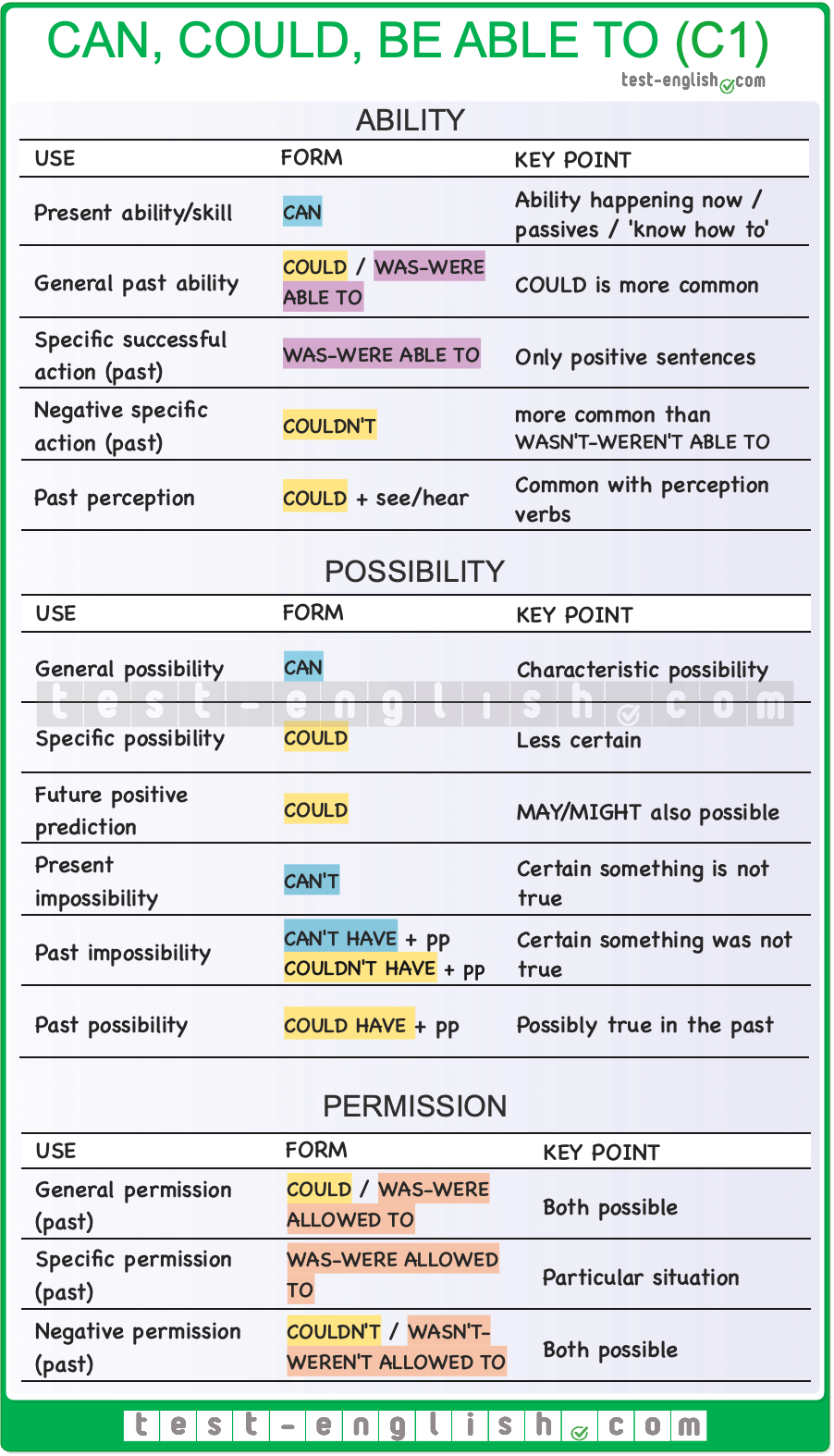
Although be able to can express ability, can is generally preferred when describing something happening right now, before passive structures, and when we are talking about a skill or competence (‘knowing how to do something’).
- Watch this — I can solve it in under a minute.
- The results can be viewed online.
- She can interpret complex data sets.
We use could (more common) or was/were able to to describe general ability in the past:
- By the age of ten, she could speak three languages.
- When I was younger, I was able to stay up all night without feeling tired.
When referring to a specific action in the past, we normally use was/were able to in positive sentences:
- Despite the confusion, we were able to complete the task on time.
In negative sentences, couldn’t is usually more natural than wasn’t/weren’t able to:
- She couldn’t convince them to change their decision.
With verbs of perception and certain mental processes, could is commonly used to refer to past ability:
- I could hear someone calling my name.
- We could see the lights from the other side of the valley.
Possibility: can vs could
We use can to describe a general or characteristic possibility. We use could (not can) to refer to a specific possibility:
- Working from home can reduce commuting time significantly.
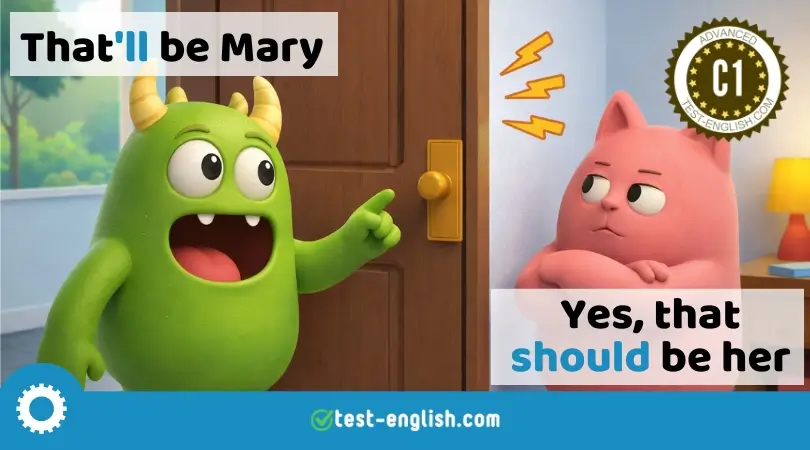
- Don’t pick up the phone. It could be your ex.
For positive predictions about the future, we use could instead of can (may/might are also possible in this context):
- It could snow later this evening.
We use can’t, not couldn’t, to say that something is impossible:
- He can’t be serious.
We use can’t have or couldn’t have + past participle to express strong certainty that something was not true:
- She can’t/couldn’t have misunderstood the instructions; they were very clear.
We use could have + past participle to say that something was possibly true in the past:
- They could have taken the earlier train.
Permission: could and be allowed to
We can use either could or was/were allowed to to say that someone had general permission to do something in the past:
- Students could leave early on Fridays.
- Students were allowed to leave early on Fridays.
To refer to permission for a particular action in the past, we use was/were allowed to, not could:
- Although he arrived late, he was allowed to join the meeting.
In negative sentences, we can use either couldn’t or wasn’t/weren’t allowed to:
- We couldn’t enter the building after 6 p.m.
- We weren’t allowed to enter the building after 6 p.m.
May and might
Possibility and register
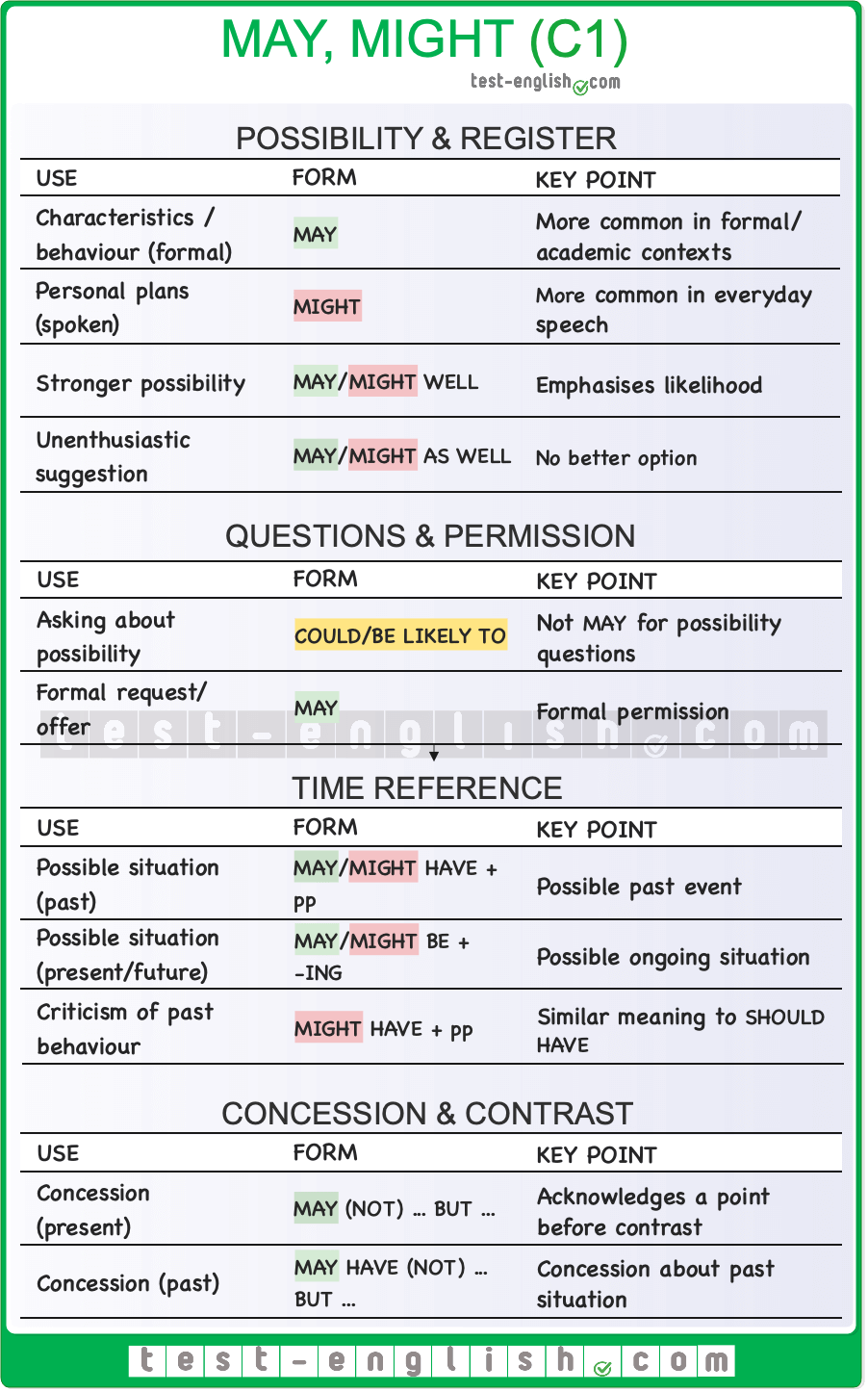
May and might both express possibility. In formal or academic contexts, may is often used to describe characteristics or behaviour, while might is more common in spoken English, especially when referring to future plans.
- High temperatures may affect performance.
- I might take the afternoon off.
We can add well after may or might to suggest a stronger possibility:
- It may well take longer than expected.
- She might well refuse the offer.
We can also use may/might as well + infinitive to make an unenthusiastic suggestion, often when there is no better option:
- We might as well leave now; there’s nothing else to do.
Questions and permission
We do not use may to ask about possibility. Instead, we use could or expressions such as be likely to:
- Could this be the right solution?
- Is it likely to rain today?
May is used in formal requests and offers:
- May I make a suggestion?
Time reference
We use may/might have + past participle and may/might be + -ing to talk about possible situations in the past, present or future:
- She may have missed the message.
- He might be working from home today.
- By the end of the day, I might have finished the job.
Might have + past participle can also be used to criticise someone’s behaviour (similar to should have):
- You might have told me you were leaving early.
Concession and contrast
May can be used before a clause with but to introduce a strong contrast. This structure acknowledges a point before presenting a different or opposing idea:
- The proposal may be ambitious, but it is achievable. (=Although the proposal is ambitious…)
- He may have made mistakes, but his intentions were good.

-

Download lessons and tests as PDFs
Upgrade to PRO for printable PDFs and a more personalised learning experience.
- PDFs for every lesson and test
- An ad-free experience
- Progress tracking
- Skill badges
- Learner leaderboards

Watch the one-minute PRO overview
Exercises
Explanation
Downloads