-
Pollution and how to stop it
In this Intermediate Vocabulary Lesson about Pollution, you will learn useful words to talk about pollution and ways we can help solve these problems. The pictures, descriptions, and examples below will help you understand and remember the terms.
Pollution words
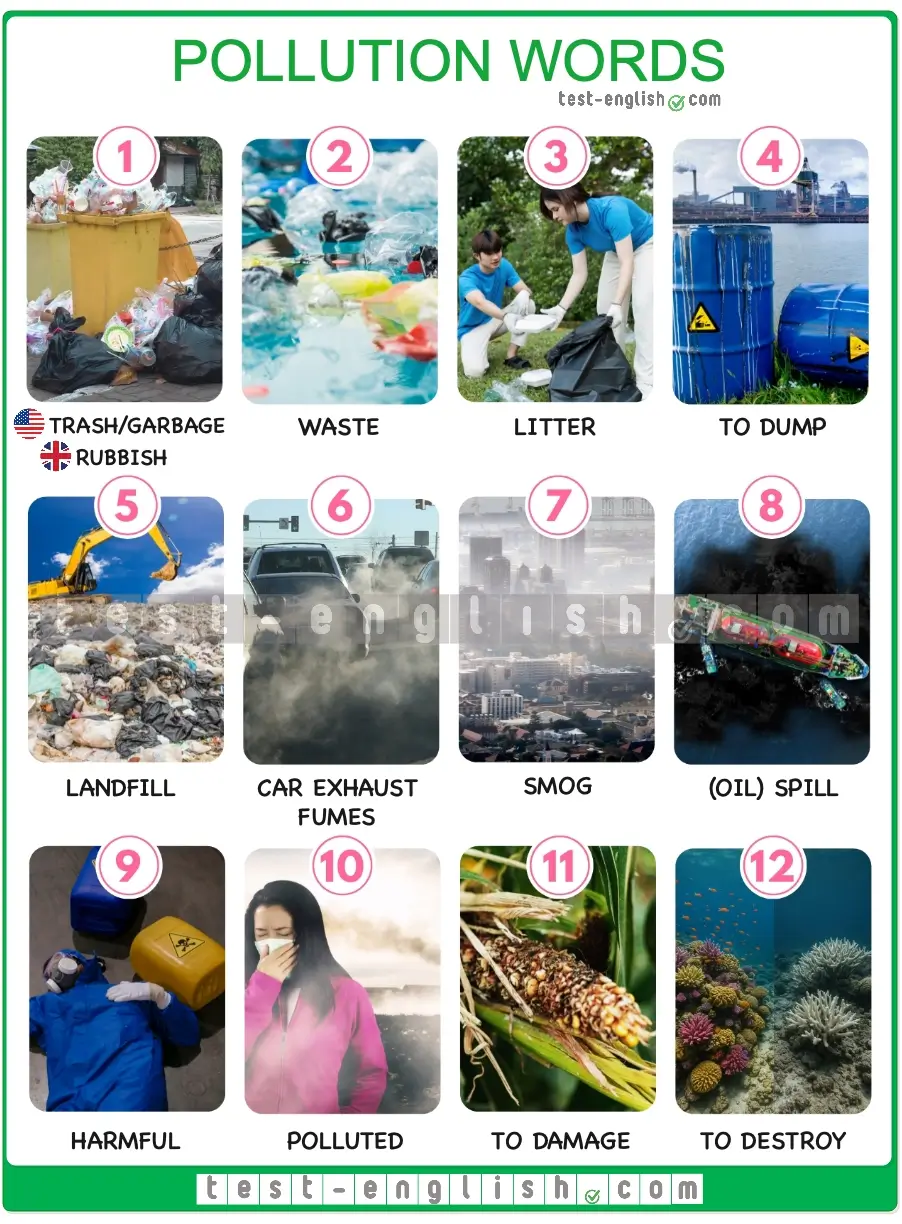
1 Trash/garbage and rubbish are things that people throw away because they don’t want or need them. (Trash and garbage are used in American English; rubbish is used in British English.)- There was a lot of rubbish on the beach after the party.
2 Waste is material or things that are not needed and are thrown away, often from homes or factories.
-
There is too much plastic waste in the ocean.
3 Litter means small pieces of trash, like bottles or paper, left in public places.
- There is a lot of litter in the park after the weekend.
4 To dump means to throw waste or rubbish in places where it should not go.
- Some factories dump waste into rivers.
- Dumping rubbish in nature is illegal.
5 A landfill is a place where a lot of waste or rubbish is buried under the ground.
- Most of our rubbish goes to a landfill outside the city.
6 Car exhaust fumes are dirty gases that come out of a car’s engine.
- Car exhaust fumes make the air dirty in big cities.
7 Smog is dirty air in cities, made of smoke, gases, and fog.
- Smog is a big problem in many large cities.
8 A spill happens when a liquid like oil accidentally goes into nature or water.
- The oil spill made the beach dirty and hurt the animals.
9 If something like waste or pollution is harmful, it means that it can hurt people, animals, or the environment.
- Car fumes are harmful to our health.
10 If something like air or water is polluted, it means that it is dirty and unsafe because of harmful things in it.
- The air in big cities is often polluted.
11 To damage means to hurt or make something worse or weaker.
- Chemicals can damage plants and animals.
12 To destroy means to completely ruin something so it cannot be used or does not exist anymore.
- Big oil spills can destroy beaches and sea life.
Solutions to pollution
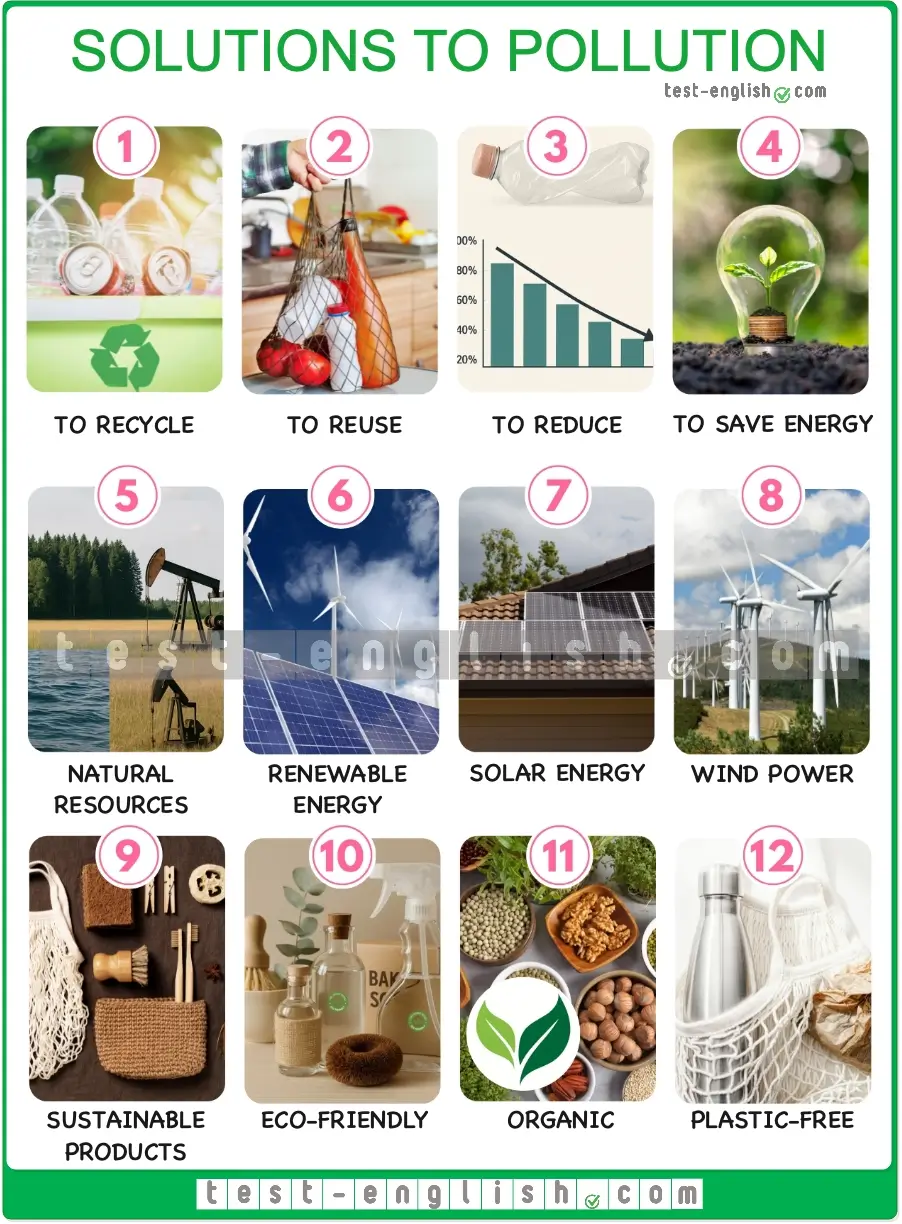
1 To recycle means to use things like paper, glass, or plastic again to make new things.- We should recycle bottles and cans.
2 To reuse means to use something again instead of throwing it away.
- You can reuse bags when you go shopping.
3 To reduce means to use less of something.
- We should reduce the amount of plastic we use.
4 To save energy means to use less electricity, gas, or water.
- You can save energy by turning off the lights.
5 Natural resources are things we use from nature, like water, trees, and oil.
- We must protect our natural resources for the future.
6 Renewable energy is energy that comes from sources that never run out, like the sun or wind.
- Renewable energy is better for the planet than oil or coal.
7 Solar energy is energy from the sun that can be used for electricity or heating.
- We use solar energy to heat our water.
8 Wind power is electricity made using the wind.
- Wind power is a clean way to make electricity.
9 Sustainable products are things made in a way that does not harm or destroy natural resources.
- They make sustainable products to protect the environment.
10 Eco-friendly means something that is good for the environment or does not hurt it.
- It is better to use eco-friendly cleaning products at home.
11 Organic food or products are made without harmful chemicals.
- Many people buy organic fruit and vegetables.
12 Plastic-free means something that does not contain any plastic.
- We can help the environment by using plastic-free bottles and bags.
FlashcardsAfter completing the exercises in this lesson on Pollution, you can use the unit’s Vocabulary Flashcards to revise and help you memorize the terms.

-

Download lessons and tests as PDFs
Upgrade to PRO for printable PDFs and a more personalised learning experience.
- PDFs for every lesson and test
- An ad-free experience
- Progress tracking
- Skill badges
- Learner leaderboards

Watch the one-minute PRO overview
Exercises
Explanation
Downloads


